Hello, I’m Shinji from Warashibe-Chōja.JP. This time, I’ll introduce rare masterpieces that even Japanese kimono enthusiasts rarely get to see. Having worked with kimono for over 20 years, I’ve encountered many pieces inaccessible to the general public. I’ll showcase everything from items you’ve heard of to ones that will make you exclaim, “I had no idea such things existed!” 1.Antiques Generally, in the world of kimono, the distinction between antique and vintage pieces is often based on era, with pre-war items commonly referred to as antique kimono. Vintage kimono typically refers to pieces from the post-war Showa era, around the 1950s to 1970s. Many antique kimono are also known as Meisen, which enjoy enduring popularity.Primarily produced during the Meiji and Taisho eras, Meisen kimono were made using yarn spun from waste silk fibers and silk cocoons. This made them durable and affordable, making them highly valued among the general populace. 2.Kimonos with reduced production quantities Once produced on a large scale, only about 2,000 tan (approximately 1,320 square meters) are made annually now. Fabrics like jofu, a type of kimono woven only two or three times a year, and ushi-kubi tsumugi, which nearly ceased production at one point, have also […]
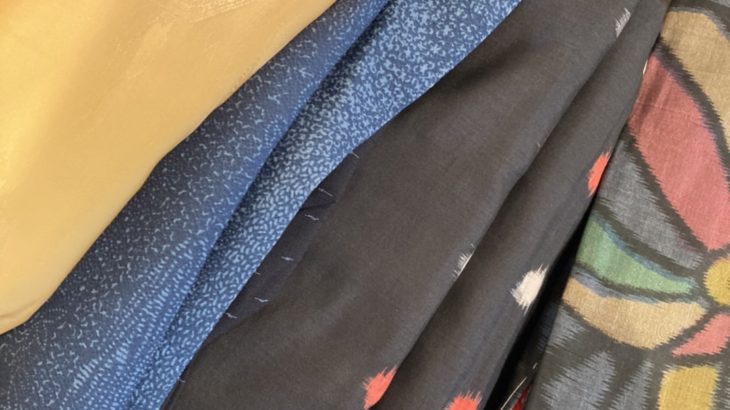
こんにちは、わらしべ長者.JPのシンジです。今回は、日本の着物好きな方でも滅多に見る事の出来ない逸品のご紹介をします。着物に携わって20年以上経ちましたが、一般のお客様では見れない様な作品もたくさんあります。名前は聞いたことあるものから、そんなものが存在したのか!と驚くようなものまでご紹介します。 1、アンティークもの 一般的に、着物の世界では、アンティークものと古着の違いは、年代によって分けられる事が多く、戦前のものをアンティーク着物と呼ぶことが多いです。古着は戦後の昭和30~50年頃のものを指します。アンティークの中には銘仙と呼ばれるものも多く、根強い人気のものになります。主には明治~大正時代に作られており、屑糸や玉繭からとった糸を使って作る事から丈夫で安価なもので市民の間で重宝されたものになります。 2、生産反数の減少した着物 着物の世界では、生産反数の減少が進んでいます。よく名前を耳にする大島紬でも昭和50年代は年間20000反が生産されていましたが、今では年間2000反程しか作られていません。年に2~3本しか織られない上布と呼ばれる着物や一時は生産が止まりそうだった牛首紬等も希少な織物になります。 3、廃業された工房の作品 全国各地で作られていた紬。元々は屋根裏で蚕を飼い、上質な繭を育て現金化していたが、売れない屑糸と呼ばれる様なもので自分たちが着る為の着物を作っていたのが紬の始まり。農作業の出来ない冬に時間をかけて作っていた織物が多く、手間がかかりすぎるので現代では織る人も少なくなり織られなくなった織物もたくさんあります。先日、見つけた結城上布もその一つ。工房が廃業されもう生産されていません。人気の白大島『恵大島紬織物』の白恵泥もその1つ。 Instagram:わらしべ長者.JPECサイト: Warashibechoja.jp
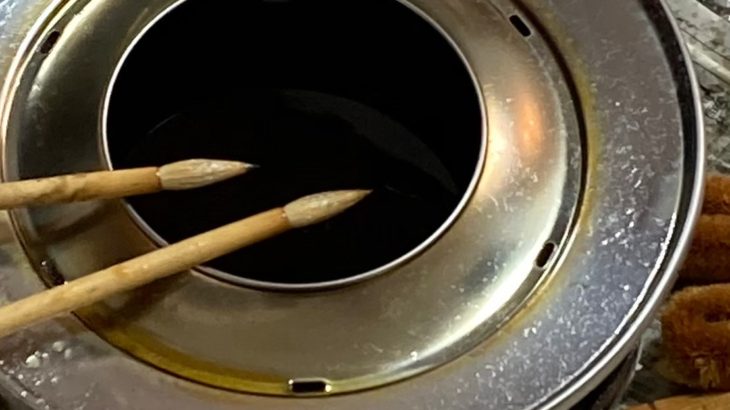
Hello, this is Shinji from Warashibechoja JP. The New Year has begun… We are gradually gaining recognition through Instagram, and we are busy with inquiries from our customers. As the Chinese zodiac sign for this year is a rabbit, I hope that 2023 will be a year of leaps and bounds.In the midst of all this, I had the opportunity to visit the studio of a kimono artist who has been a good friend of mine for a long time, and experience a part of the wax-dyeing process. What is Batik? It is a dyeing method using wax that is used all over the world, and is said to have been used in Japan since the Nara period (710-794). It is said that the cloth was hardened with wax to prevent dyeing, then the surrounding area was dyed and the wax was removed to add patterns. Creation procedure 1) Use a brush to lay down the wax on the dyed-out area. The wax will harden quickly at this point, so it is a game of speed to write before it hardens. 2) The area covered with wax is dyed with an anti-dyeing agent, so the surrounding area is dyed. In […]
Hello, this is Shinji from Warashibe-choja.jp. Summer is approaching, and for the first time in three years, fireworks displays and summer festivals will be held in various places in Japan. I think it is a good idea to go out in a kimono or yukata this summer.In this issue, I would like to introduce the best accessories for kimonos and yukatas. 1、Han-Eri Han-Eri is to be attached to a long undergarment to be worn under a kimono. Recently, more and more people wear a hanbira under a yukata (summer kimono) as a simple kimono.In summer, beaded Han-Eri, which is easy to clean, and lace Han-Eri, which looks cool, are also popular.There are also many stylish Han-Eri that can be worn with non-summer kimonos. 2、Obidome Obidome is an ornament that is placed through the obijime so that it comes to the front of the obi.There are beautiful jewel-like obidome, wooden obidome, and authentic wagashi-style obidome made of colored clay by a former wagashi (Japanese confectionery) craftsman. The sparkling and shiny ones can be worn with formal kimonos, while the others can be worn with everyday clothes. Some overseas customers buy them as pendant tops as well. 3、Zori ( = Japanese footwear […]
Hello, this is Shinji from Warashibechoja JP. It is getting warmer and warmer, the cherry blossoms have started to bloom, and it is a good season to go out in kimonos. My Instagram, which I started last year, is going well and I now have more than 1,200 followers. Thank you very much. This time, we have received many questions from our customers, so we would like to write an article based on the mutual thoughts of a recycled kimono shop and a kimono shop dealing with new kimonos. 1、Difference between recycled kimono and new kimono 1, Size Generally, there is an image that recycled kimonos are old, but in fact, there is a problem before that. It is the width of the fabric. The width of an old kimono is about 9″5″ (=about 36 cm), but the width of a recent kimono is generally 1 shaku (=37.8 cm) or more. The longest kimono is 1 shaku 1 sun (= translates to 41.5 cm).Japanese people are said to have been small in the past, but this is not true. The way to measure the length of the Yuki (hand length in kimono) was different, and many old kimono were short. […]
Hello, this is Shinji from Wareshibe-choja.jp. This time, I would like to talk about yukata, a Japanese summer tradition. It is only March, but in order for consumers to see yukata, manufacturers prepare them at the end of last year, and in March, retailers go to wholesalers and manufacturers to stock them, which is the flow of the kimono industry. Recently, due in part to the impact of the H1N1 influenza, the main trend has been to produce to order in order to avoid overstocking. 1, History of Yukata During the Heian period in Japan, the main type of bath was a steam bath, and people bathed in a linen kimono worn at that time. In the Kamakura period, people bathed in loincloths and underwear called yumonji, and in the Azuchi-Momoyama period, people began to bathe naked. In the Edo period (1603-1867), after the spread of public bathhouses, the common people began to wear a cotton kimono called yukatabira to absorb excess water after bathing, which is said to have been the beginning of the yukata. 2, Spread of yukata In the Edo period (1603-1867), yukata, which were worn after taking a bath or as a nightgown, gradually came to […]
Hello, this is Shinji from Warashibe-choja.jp. Speaking of Nishijin, it is the largest obi production area in Japan.As I sometimes advertise on Instagram (@warashibe-choja.jp), I’ve been working with the craftsmen of Nishijin-ori to find ways to introduce Nishijin-ori to the world. This time, I would like to introduce some of the things we are working on with the craftsmen of Nishijin. History of Nishijin As I have mentioned before, after the Onin War (1467-1477), weavers who had scattered to various places returned to Kyoto and resumed weaving. The name “Nishijin” came from its location west of the Kyoto Imperial Palace. Types of Weaving Weaving has been flourishing since the 5th century, and after the Onin War, the area was called Nishijin, and this year marks 555 years since then. During that time, many techniques have been born and disappeared. I would like to introduce some of the techniques and weaving methods that still remain today. Tsuzure-ori The origin of Tsuzure-ori is said to be in Egypt, where Tsuzure-ori clothing was found in a royal tomb in the 15th century BC. It is said to have been introduced to Japan in the Asuka period, but after that, it was no longer […]
Hello, this is Shinji from Warashibe Chosha JP. This time, I went to Amami Oshima to study how Oshima tsumugi is made.I talked to a craftsman who actually makes Oshima tsumugi kimonos. Oshima tsumugi is a plain weave kimono made in Kagoshima Prefecture. There are many types of Oshima pongee, including mud Oshima, indigo Oshima, white Oshima, and colored Oshima. This time, I would like to introduce you to the authentic Amami Oshima mud Oshima. 1. What is Oshima tsumugi? Oshima tsumugi, known as one of the three major pongees in Japan, is characterized by its lightness and durability. The yarn is yarn-dyed to express really fine patterns.The yarn is dyed in the boiling water and mud fields of the tehchigi (Raphiolepis umbellata). A chemical reaction between the tannic acid in the water and the iron in the mud creates a black color that is unique to Oshima tsumugi. 2, the prestige of Oshima tsumugi As I will explain later in this article, Oshima tsumugi is a very expensive fabric that requires a lot of work. The price of a kimono is not necessarily the same as its style, and Oshima tsumugi is more like jeans in terms of clothing. […]
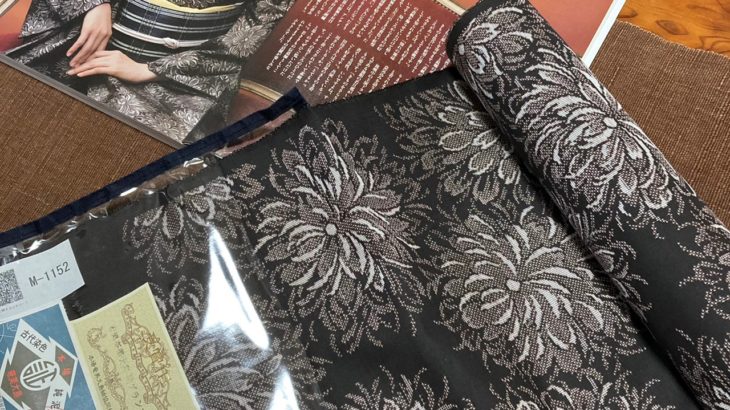
Hello, this is Shinji from warashibe-choja.jp. This time, I’d like to talk about Hakata-ori, the fabric of Fukuoka Prefecture, my birthplace. Many kimono fans have at least one piece of Hakata-ori because it is easy to tie and does not fall apart easily. This time, I would like to talk about Hakata Obi, which is loved by both beginners and experts of kimono. History of Hakata-ori In 1235, during the Kamakura period (1185-1333), Mitsuta Yasouemon traveled to Song Dynasty (960-1279) in China to learn Danshi weaving and invented floating weaves such as “Tokko” and “Hana-zara” with designs of Buddhist altars. Kenjyo-Hakata-ori After the Battle of Sekigahara, Hakata-ori entered a new era under the Kuroda Clan and became known throughout Japan. Hakata-ori was chosen as a gift for the Edo shogunate. The pattern chosen was the “Tokko-hana-zara” pattern, the origin of Hakata-ori. In addition, Ichikawa Danjuro VII, a popular Kabuki actor at the time, wore Hakata-ori in his performance of Sukeroku Yukari no Edo Zakura (The Cherry Tree of Sukeroku), which led to the spread of Hakata-ori throughout Japan. Goshiki-kenjyo I often find people who say, “Hakata-ori has many similar colors, doesn’t it? In fact, Hakataori has colors that represent the […]
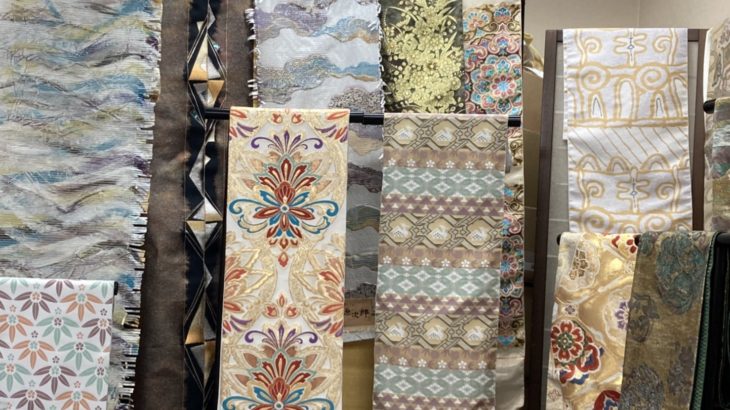
Hello, this is Shinji from Warashibe-choja.jp. Before COVID-19, I saw many tourists in kimono in Kyoto, but now there are fewer and fewer. I used to see people wearing furisode and hanhaba-obi. However, there is actually a reason why people wear hukuro-obi when they are involved in kimono.Depending on the material of the obi and the shape of the obi, there is a certain prestige to the obi as well as the kimono. In this article, I would like to introduce the different types of obi. 1,Type of Obi There are various types and materials of obi, and the grade of the obi varies depending on its shape and material. In this article, I would like to talk about some of the most common types. It is said that the obi was first created in the Muromachi period (1336-1573), and until then, the kimono was held in place with strings. When Ashikaga Yoshimasa was the shogun, the obi was called hiraguke obi, which is about 8cm wide and 3m long. The hiraguke obi is now used as an obi to be tied to the hanten at festivals. ① Hukuro-obi As the name suggests, a sack obi is an obi that […]