Hello, I’m Shinji from Warashibe-Chōja.JP. This time, I’ll introduce rare masterpieces that even Japanese kimono enthusiasts rarely get to see. Having worked with kimono for over 20 years, I’ve encountered many pieces inaccessible to the general public. I’ll showcase everything from items you’ve heard of to ones that will make you exclaim, “I had no idea such things existed!”
1.Antiques
Generally, in the world of kimono, the distinction between antique and vintage pieces is often based on era, with pre-war items commonly referred to as antique kimono. Vintage kimono typically refers to pieces from the post-war Showa era, around the 1950s to 1970s. Many antique kimono are also known as Meisen, which enjoy enduring popularity.
Primarily produced during the Meiji and Taisho eras, Meisen kimono were made using yarn spun from waste silk fibers and silk cocoons. This made them durable and affordable, making them highly valued among the general populace.

2.Kimonos with reduced production quantities
Once produced on a large scale, only about 2,000 tan (approximately 1,320 square meters) are made annually now. Fabrics like jofu, a type of kimono woven only two or three times a year, and ushi-kubi tsumugi, which nearly ceased production at one point, have also become rare textiles.
3.Works from closed workshops
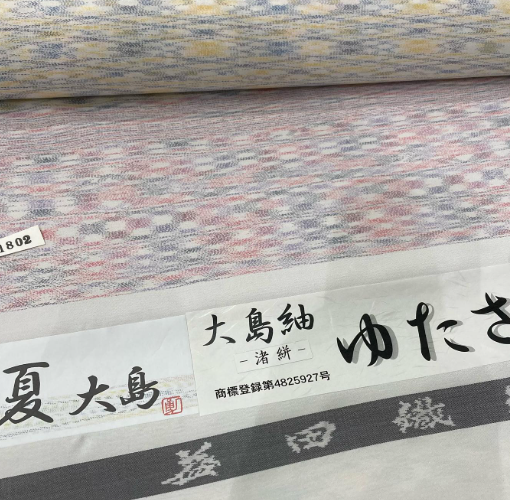
Tsumugi was woven throughout Japan. Originally, people raised silkworms in their attics to cultivate high-quality cocoons for cash, but they used the leftover scraps—called “scrap thread”—to make kimonos for themselves. This was the beginning of tsumugi. Many of these fabrics were woven during winter when farm work was impossible, taking considerable time. Because they require too much labor, few people weave them today, and many fabrics are no longer produced.
The Yuki Jofu I found recently is one such example. The workshop closed, and it is no longer produced.
The popular white Oshima ‘Megumi Oshima Tsumugi’ fabric, specifically the white Megumi-de, is another.
Instagram:わらしべ長者.JP
Shop: Warashibechoja.jp